Ancient History Is Not Always Ancient
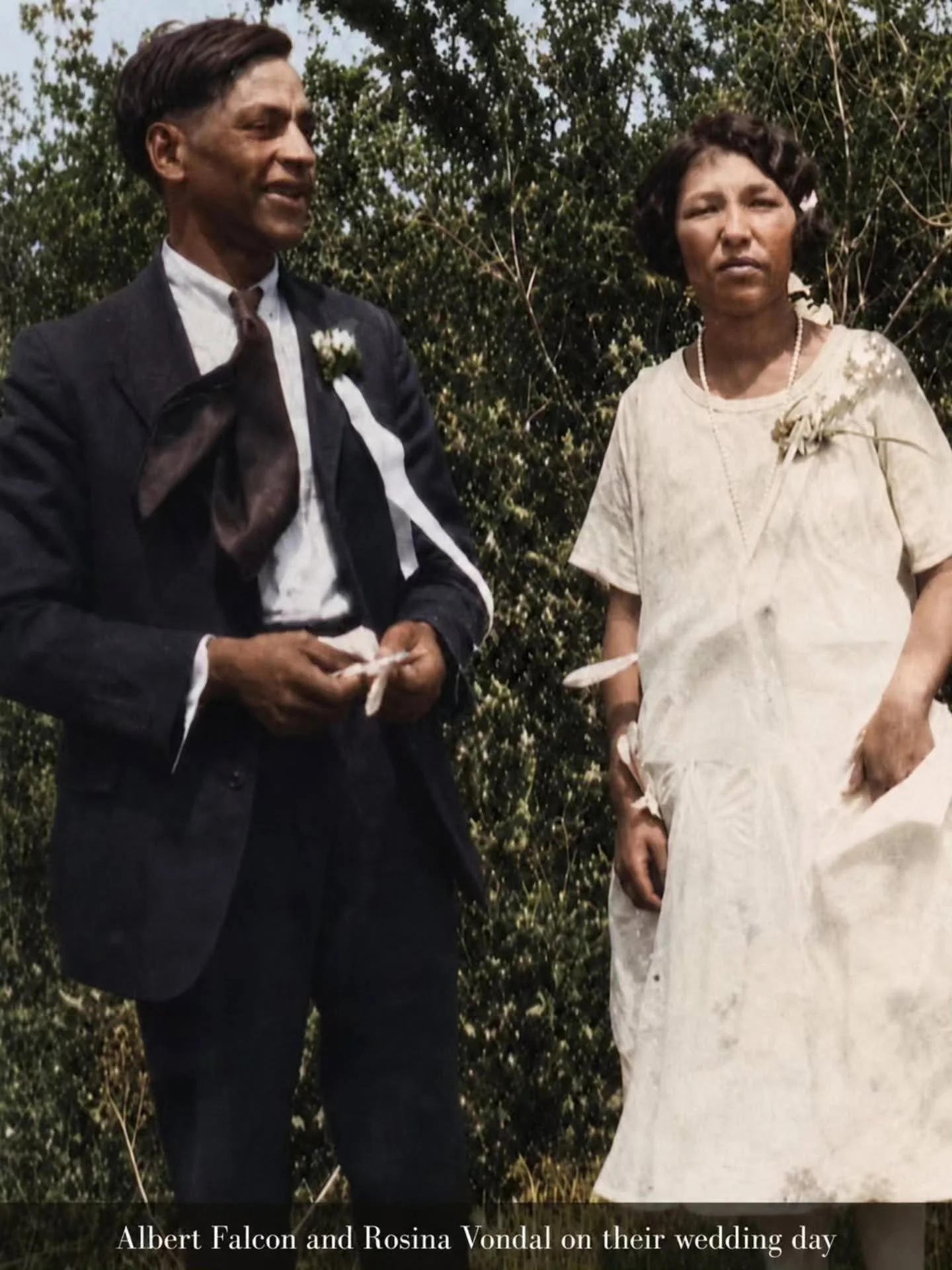
For most Americans, the Plains Indian Wars belong to another age. They exist in history books, museum exhibits, old photographs, and Western movies.
In my family, that history was never far away.
My grandfather Albert Falcon was born in 1900. My grandmother, Rosina Vondal, was born in 1909 on the Turtle Mountain Chippewa Indian Reservation in North Dakota. She and her siblings were sent to an Indian boarding school.
When she arrived, she could not speak English. Neither could many of the other children. They were punished for speaking the only language they knew, even when they were simply trying to understand what the adults wanted from them.
She was fifteen years old when the Indian Citizenship Act was signed in 1924.
I knew my grandmother very well. I heard her stories. I also grew up hearing other community elders talk about their parents running from the cavalry. Not distant ancestors whose names had disappeared into history. Their parents.
That changes the way history feels.
I am an enrolled member of the Turtle Mountain Band of Chippewa Indians. I am also an American veteran who spent twenty-seven years in tribal, county, and federal law enforcement, most of it serving Indian Country.
I began as a tribal police officer serving Indian Country. I eventually retired as a federal law-enforcement executive responsible for programs and personnel serving tribal communities across the country.
I am proud to be Indigenous. I am proud to be an American. I am proud to have served both my people and my government.
Those identities have never felt contradictory. Loving a country and telling the truth about its history are not opposing acts. Serving an institution does not require pretending it has never failed. Caring about tribal communities also means recognizing their strength, humor, resilience, and traditions as clearly as their wounds.
That is the place from which I write.
My stories come from a life spent close to the culture, the people, the history, and the institutions that shape Indian Country. They come from listening to elders, working beside tribal officers, and sitting with families during some of the worst moments of their lives.
I write about institutional failures because I have seen them. I write about dedicated public servants because I have known them. I write about jurisdiction, family, identity, history, and spiritual traditions because those things do not exist separately in Indian Country.
For much of America, this is ancient history.
For many Indigenous families, it is still sitting at the kitchen table.
For me, it is also where the stories begin.
