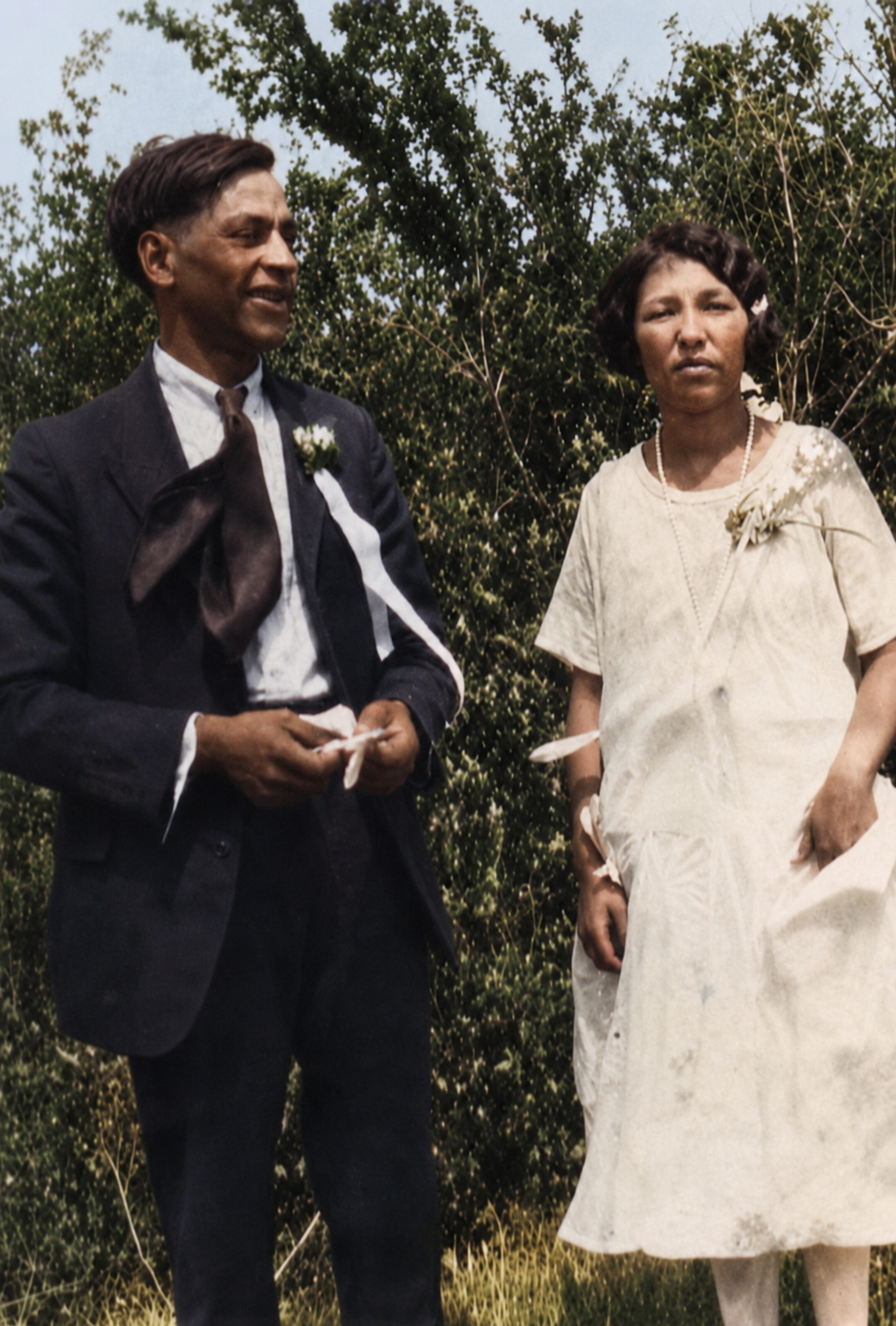
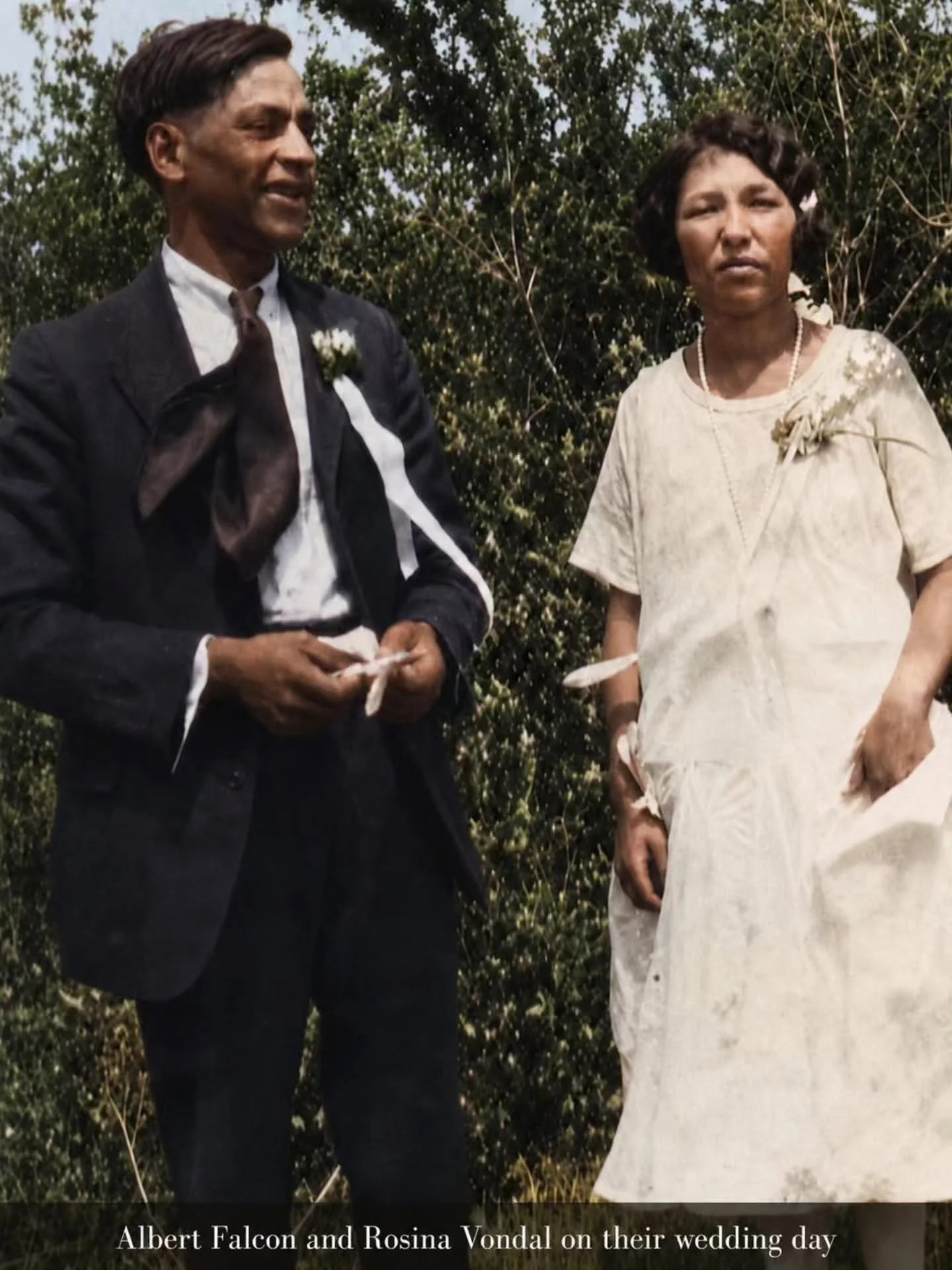
1924
My grandparents, on their wedding day.
This is why I say ancient history is not always ancient. It is two generations back, not two centuries. Everything I write here starts from that.
Where Everybody Knows Your Name
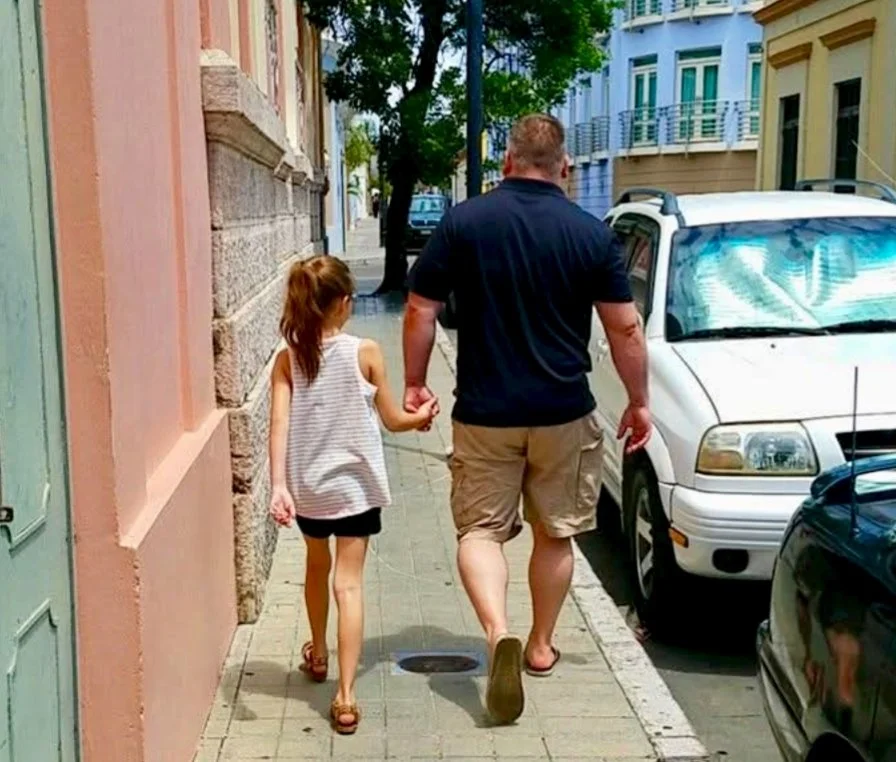
My wife and I were walking through a store with our young son. She was pushing our daughter in a baby carriage, and I was holding my wife’s hand.
Then I let go.
She told me later that she looked over as I walked into another aisle without looking back. She turned her attention the other way, took our son’s hand, and continued toward another part of the store with both children.
Then she heard a man call out.
“Jay! What’s up, fucker?”
My wife and I had an understanding.
If we were out with our children and I suddenly stopped talking to her, ignored the kids, and walked away, she knew to let me go. We had discussed it ahead of time. She understood what was happening and what she needed to do.
At the time, I was working undercover narcotics in Bemidji, Minnesota, with the Headwaters Safe Trails Task Force and the Paul Bunyan Drug Task Force. I bought drugs from dealers supplying three Native communities: Red Lake, Leech Lake, and White Earth. I also worked illegal firearms cases.
Depending on whom I was dealing with, they knew me as Jay, Joe, or another name I was using for an investigation.
My children knew me as Daddy.
Bemidji serves as a commercial hub for all three reservations. People come into town for groceries, clothes, prescriptions, dinner, and movies. Families from those communities shop at the same businesses. So did mine.
I made more undercover drug buys in broad daylight in Walmart and Walgreens parking lots than in any dark alley at midnight. People were shopping and running errands around us while I bought the drugs being sold in our communities.
Then I would come back to those places with my family.
If a dealer or an informant recognized me, I had to be the person they knew. I had to answer to that name and continue whatever relationship I had established with them. I also had to keep my wife and children out of the encounter.
My wife is Native. We were another Native family shopping in a town where Native families shop every day. Someone seeing us together could learn something about me that reached beyond the investigation. They could learn who my wife was. They could recognize my children the next time they saw them.
So we had an agreement that required me to let go of her hand and walk away.
It also required me to be prepared to keep walking if my little boy called, “Daddy.”
He was too young to understand why his father would suddenly ignore him. My wife understood, and she had to manage that moment for all of us. She had to recognize what was happening, take the children, and keep moving while I answered to another name.
That was part of what the work asked of her.
An undercover name served its purpose during an investigation. Once the arrests happened and the cases went through court, the people I had bought from learned who I was. They knew I was the agent who had helped put them in jail or prison.
Eventually, they could get out.
My family and I could still be living in the same community.
Tribal police officers, corrections officers, and investigators live with that recognition. Their spouses have jobs there. Their children attend school there. They shop, visit relatives, and take their kids to practice.
Reservation communities are small. In many, there is one elementary school, one girls’ basketball team, one grocery store. Your children attend school with their children. They play on the same team. Your families pass each other in the same aisles.
Your child could take karate with the child of someone you arrested. You could find yourself sitting beside that person, both of you there to watch your kids. Those encounters continue long after an arrest, a court appearance, or a prison sentence.
You have to consider what someone knows about your family and whether anger toward you could reach them. That awareness follows you into places where your children are simply enjoying their day.
When you work as an officer on the reservation you come from, there is also an understanding that eventually you will probably have to arrest someone in your own family.
That cousin you grew up with. That uncle who took you fishing.
You have a history with that person reaching back long before you put on a badge. You know the people who love them because you love those people, too. After the arrest, you still have to find your place among them.
That can make for uncomfortable family gatherings. It can cause arguments and lasting rifts over what you did, what someone believes you should have done, and whose side they think you chose.
The consequences can reach your wife and children. Invitations stop coming. Relationships grow distant. You and your family can find yourselves isolated from the larger family you grew up within.
And you still share that school, that team, that grocery store. Whatever has happened between the adults, daily life keeps bringing everyone together.
These are things I carry into my fiction. An officer has a life within the community where an investigation takes place. The people involved have histories together. They remember each other as children. They know each other’s parents. A decision made during a shift can change who speaks to whom at the next family gathering.
I want readers to know those parts of the people doing this work. Their families live with decisions they had no part in making, and sometimes they have responsibilities of their own.
My wife knew what to do when I let go of her hand. She took our son’s hand, kept pushing our daughter’s carriage, and gave me room to be Jay
The Native Lone Ranger
When I was young, I discovered reading.
I grew up in a small town in North Dakota without much money, with few chances to visit faraway places. Then, on a cold, rainy day, bored because there was nothing on the three channels we had on television, I stumbled onto a worn paperback on a shelf.
My mind was blown. I read the entire thing that afternoon.
I found that when I read books, I saw them like a movie in my head. Suddenly, I had a thousand stories from a thousand worlds playing in my mind. I got my first library card, started hitting the Bookmobile my uncle Charles drove to our school, and began reading voraciously.
Somewhere in that first long blur of books, I found Last of the Breed by Louis L'Amour and SVAHA by Charles de Lint. I was shocked, and I still remember how those books made me feel. They were adventure stories. They were survival stories. They were strange and exciting. More than that, they let me see something I had never seen before: we, Native people, could be the main character, standing at the center of the story, making the choices, carrying the adventure forward.
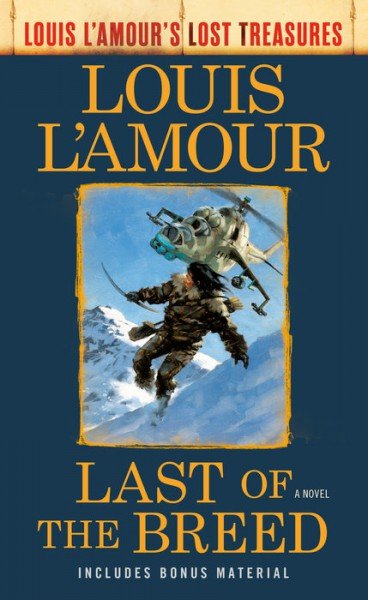
Cover image for Last of the Breed by Louis L'Amour, used for identification and commentary.
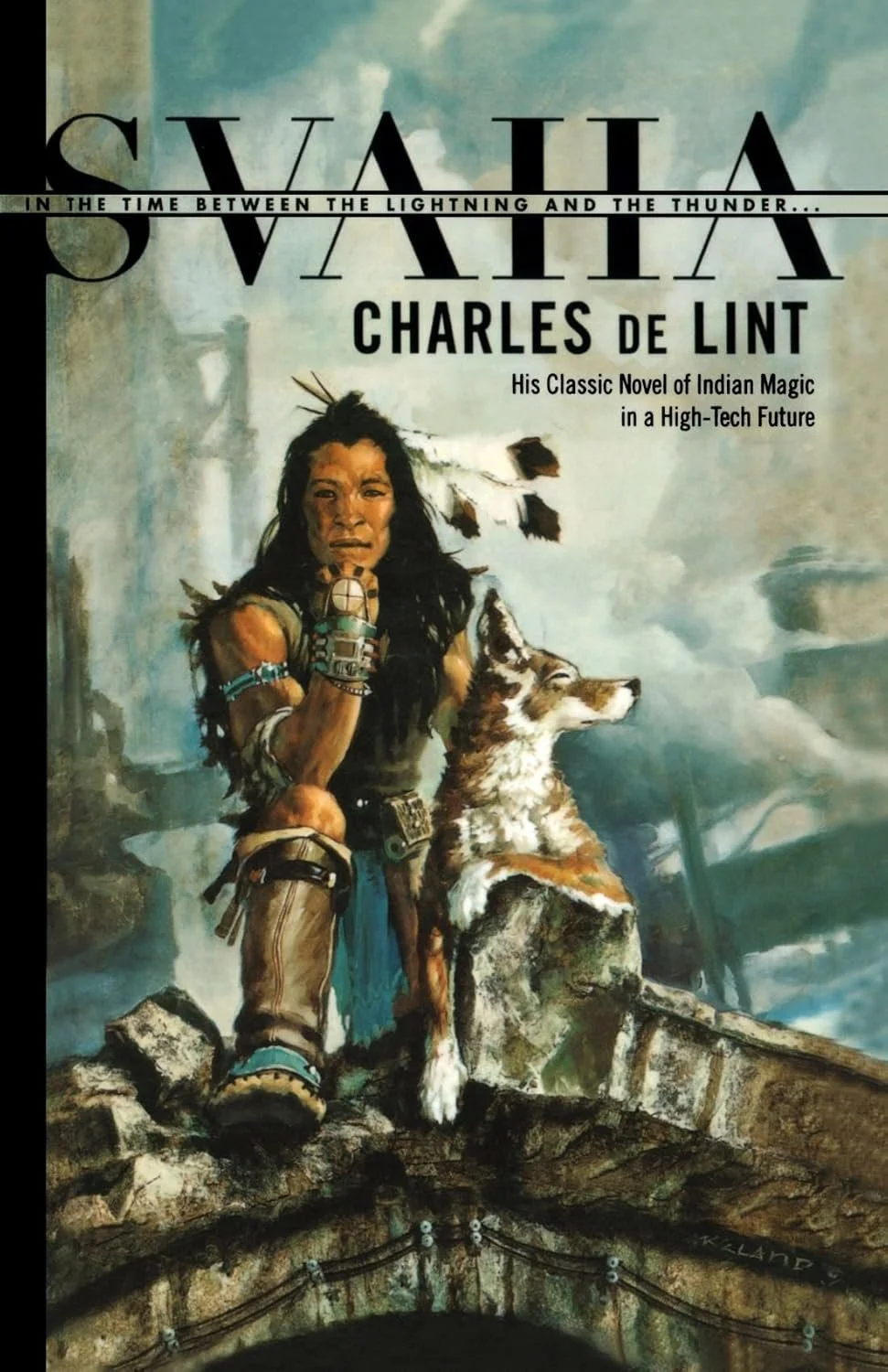
Cover image for SVAHA by Charles de Lint, used for identification and commentary.
We could be the Native Lone Ranger.
I was so excited by the newness of that. I had always felt on the outside. The people I knew growing up were rarely the people I saw in movies or magazines. That first feeling of belonging stayed with me.
Even now, I see great books finally being written from inside our communities, from our people's perspective. Those stories matter.
I also see a gap.
Native law enforcement officers, men and women, have been protecting our people since before any government was established on this continent, long before badges, agencies, statutes, or federal systems existed. That work has continued ever since. There are successful stories about Native law enforcement, but how many are written by people who have actually done the work?
After spending much of my life in Indian Country law enforcement, helping protect our people, I wanted to write stories about those men and women: the tribal officers, the BIA agents, the investigators, the ones who answer the call when the call comes from home. I wanted to write what it looks and feels like from the inside.
There is another part of this that matters to me.
If we can be the protagonist, the good guy, we can also be the antagonist, the bad guy. Full representation has to allow for that. Native people are not symbols. We are not a single moral category. We are a whole people.
That means we can be the protector and the person being protected. We can be the investigator and the suspect. We can be the person trying to save the community and the person harming it. We can be funny, brilliant, broken, selfish, brave, corrupt, loyal, dangerous, ordinary, and good.
That matters in crime fiction because crime fiction depends on human choices. It depends on motive, loyalty, fear, greed, love, silence, duty, and betrayal. Indian Country has all of that because Indian Country has real people.
I don’t want to write Native characters who exist only to represent an idea, or characters who only speak to the old ways. I want to write Native characters who feel alive on the page. Some will do the right thing. Some will do terrible things. Some will do both before the story is over.
That is where No One Came Looking began.
Marcus Black is an FBI agent, a son, a grandson, a man caught between worlds, and a Native protagonist standing at the center of his own story. The mystery, the danger, the ending, all of it matters. So does the simple act of letting him occupy the middle of the page.
Those books changed me because they showed me that we belonged at the center of the adventure. I wrote No One Came Looking from that same belief.
Ancient History Is Not Always Ancient
For most Americans, the Plains Indian Wars belong to another age. They exist in history books, museum exhibits, old photographs, and Western movies.
In my family, that history was never far away.
My grandfather Albert Falcon was born in 1900. My grandmother, Rosina Vondal, was born in 1909 on the Turtle Mountain Chippewa Indian Reservation in North Dakota. She and her siblings were sent to an Indian boarding school.
When she arrived, she could not speak English. Neither could many of the other children. They were punished for speaking the only language they knew, even when they were simply trying to understand what the adults wanted from them.
She was fifteen years old when the Indian Citizenship Act was signed in 1924.
I knew my grandmother very well. I heard her stories. I also grew up hearing other community elders talk about their parents running from the cavalry. Not distant ancestors whose names had disappeared into history. Their parents.
That changes the way history feels.
I am an enrolled member of the Turtle Mountain Band of Chippewa Indians. I am also an American veteran who spent twenty-seven years in tribal, county, and federal law enforcement, most of it serving Indian Country.
I began as a tribal police officer serving Indian Country. I eventually retired as a federal law-enforcement executive responsible for programs and personnel serving tribal communities across the country.
I am proud to be Indigenous. I am proud to be an American. I am proud to have served both my people and my government.
Those identities have never felt contradictory. Loving a country and telling the truth about its history are not opposing acts. Serving an institution does not require pretending it has never failed. Caring about tribal communities also means recognizing their strength, humor, resilience, and traditions as clearly as their wounds.
That is the place from which I write.
My stories come from a life spent close to the culture, the people, the history, and the institutions that shape Indian Country. They come from listening to elders, working beside tribal officers, and sitting with families during some of the worst moments of their lives.
I write about institutional failures because I have seen them. I write about dedicated public servants because I have known them. I write about jurisdiction, family, identity, history, and spiritual traditions because those things do not exist separately in Indian Country.
For much of America, this is ancient history.
For many Indigenous families, it is still sitting at the kitchen table.
For me, it is also where the stories begin.
New essays as they come. No schedule, no filler.
Get in touch →