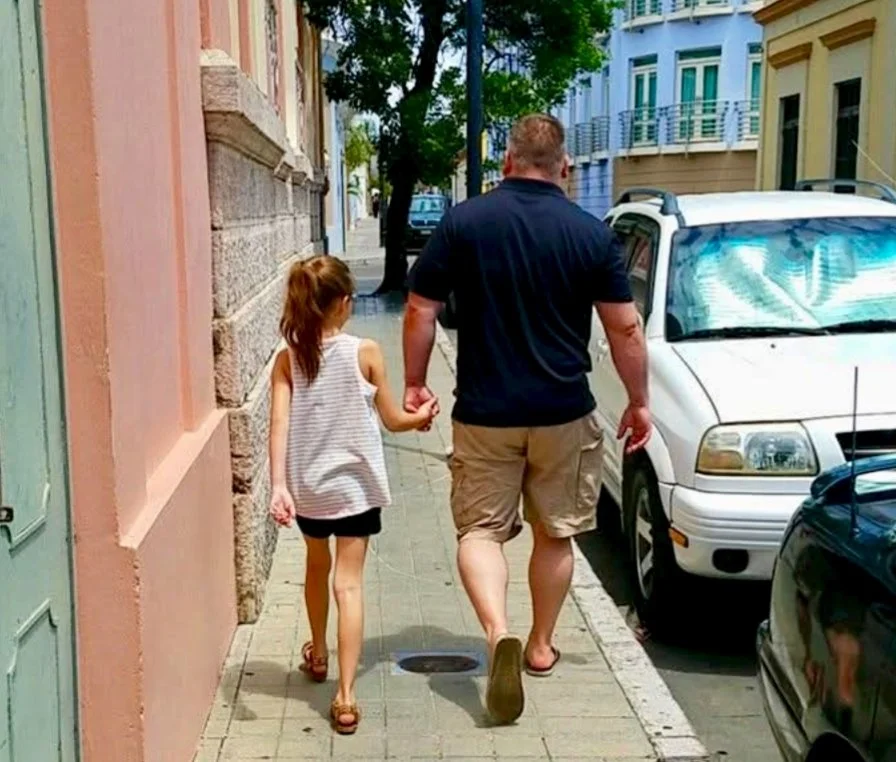
Where Everybody Knows Your Name
My wife and I were walking through a store with our young son. She was pushing our daughter in a baby carriage, and I was holding my wife’s hand.
Then I let go.
She told me later that she looked over as I walked into another aisle without looking back. She turned her attention the other way, took our son’s hand, and continued toward another part of the store with both children.
Then she heard a man call out.
“Jay! What’s up, fucker?”
My wife and I had an understanding.
If we were out with our children and I suddenly stopped talking to her, ignored the kids, and walked away, she knew to let me go. We had discussed it ahead of time. She understood what was happening and what she needed to do.
At the time, I was working undercover narcotics in Bemidji, Minnesota, with the Headwaters Safe Trails Task Force and the Paul Bunyan Drug Task Force. I bought drugs from dealers supplying three Native communities: Red Lake, Leech Lake, and White Earth. I also worked illegal firearms cases.
Depending on whom I was dealing with, they knew me as Jay, Joe, or another name I was using for an investigation.
My children knew me as Daddy.
Bemidji serves as a commercial hub for all three reservations. People come into town for groceries, clothes, prescriptions, dinner, and movies. Families from those communities shop at the same businesses. So did mine.
I made more undercover drug buys in broad daylight in Walmart and Walgreens parking lots than in any dark alley at midnight. People were shopping and running errands around us while I bought the drugs being sold in our communities.
Then I would come back to those places with my family.
If a dealer or an informant recognized me, I had to be the person they knew. I had to answer to that name and continue whatever relationship I had established with them. I also had to keep my wife and children out of the encounter.
My wife is Native. We were another Native family shopping in a town where Native families shop every day. Someone seeing us together could learn something about me that reached beyond the investigation. They could learn who my wife was. They could recognize my children the next time they saw them.
So we had an agreement that required me to let go of her hand and walk away.
It also required me to be prepared to keep walking if my little boy called, “Daddy.”
He was too young to understand why his father would suddenly ignore him. My wife understood, and she had to manage that moment for all of us. She had to recognize what was happening, take the children, and keep moving while I answered to another name.
That was part of what the work asked of her.
An undercover name served its purpose during an investigation. Once the arrests happened and the cases went through court, the people I had bought from learned who I was. They knew I was the agent who had helped put them in jail or prison.
Eventually, they could get out.
My family and I could still be living in the same community.
Tribal police officers, corrections officers, and investigators live with that recognition. Their spouses have jobs there. Their children attend school there. They shop, visit relatives, and take their kids to practice.
Reservation communities are small. In many, there is one elementary school, one girls’ basketball team, one grocery store. Your children attend school with their children. They play on the same team. Your families pass each other in the same aisles.
Your child could take karate with the child of someone you arrested. You could find yourself sitting beside that person, both of you there to watch your kids. Those encounters continue long after an arrest, a court appearance, or a prison sentence.
You have to consider what someone knows about your family and whether anger toward you could reach them. That awareness follows you into places where your children are simply enjoying their day.
When you work as an officer on the reservation you come from, there is also an understanding that eventually you will probably have to arrest someone in your own family.
That cousin you grew up with. That uncle who took you fishing.
You have a history with that person reaching back long before you put on a badge. You know the people who love them because you love those people, too. After the arrest, you still have to find your place among them.
That can make for uncomfortable family gatherings. It can cause arguments and lasting rifts over what you did, what someone believes you should have done, and whose side they think you chose.
The consequences can reach your wife and children. Invitations stop coming. Relationships grow distant. You and your family can find yourselves isolated from the larger family you grew up within.
And you still share that school, that team, that grocery store. Whatever has happened between the adults, daily life keeps bringing everyone together.
These are things I carry into my fiction. An officer has a life within the community where an investigation takes place. The people involved have histories together. They remember each other as children. They know each other’s parents. A decision made during a shift can change who speaks to whom at the next family gathering.
I want readers to know those parts of the people doing this work. Their families live with decisions they had no part in making, and sometimes they have responsibilities of their own.
My wife knew what to do when I let go of her hand. She took our son’s hand, kept pushing our daughter’s carriage, and gave me room to be Jay